Diamond Inside a Ring: How It Works, What It Costs, Which Stones to Choose
The most profound symbols of love are often the ones unseen. A hidden detail, known only to the wearer, can carry more meaning than any outward display of
Quick Facts: The Surprise Diamond
| Property | Details |
|---|---|
| Common Names | Surprise diamond, hidden gem, secret stone |
| Primary Meaning | An intimate secret; symbolizes the inner beauty and depth of a relationship |
| Ideal Setting Style | Flush (or Gypsy) setting, ensuring a smooth, secure fit inside the band |
| Typical Added Cost | $200 - $325 (for a small diamond, including expert labor) |
| Comfort for Daily Wear | Completely comfortable and smooth to the touch when properly set |
| Customization Options | Diamonds, sapphires, rubies, or other meaningful birthstones can be used |
| vs. Hidden Halo | Set inside the band (wearer-facing) vs. a halo under the center stone (profile view) |

Introduction
A diamond inside a ring is exactly what it sounds like: a small stone set flush into the inner band, invisible when the ring is worn, visible only when removed. Sometimes called a "surprise diamond" or "hidden gem." It is a private detail between the person wearing the ring and whoever gave it to them.
The idea has been around for decades in fine jewelry. It has gained mainstream attention in the last few years as people look for ways to personalize engagement rings beyond the obvious. This guide covers how it is done, what it costs, which stones work, and what to watch for in execution quality. Updated March 2026.
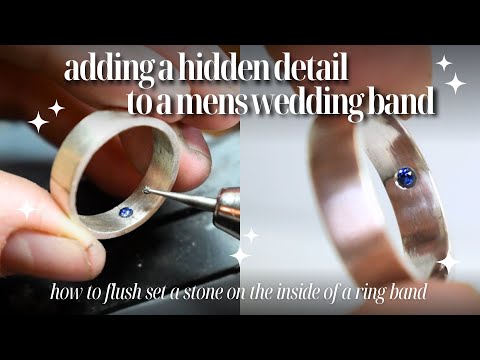
How to Flush Set a Hidden Stone Inside a Ring
The Secret Language: What a Hidden Diamond Symbolizes
The appeal is simple: a detail that only the wearer knows about. It can be a birthstone of the person giving the ring, a stone that matches the recipient's birth month, an anniversary stone, a color that means something specific to the couple. The ring looks completely standard from the outside.
What Works Well as a Hidden Stone
The classic choice is a small diamond or white sapphire, essentially invisible against a white gold or platinum band. More personal options: the giver's birthstone set inside as a private signature. A colored stone that connects to a memory or place. A pair of tiny stones representing two birth months in a couple's ring.
We personally find the birthstone approach the most thoughtful. A 2mm Ceylon sapphire or garnet inside an engagement ring costs very little but carries a specific, traceable story. That matters more than the stone's monetary value.

From Our Jeweler's Bench: The Art of the Hidden Gem
Getting a stone inside a ring right is a test of a jeweler's technical skill. Done well: completely smooth, undetectable to touch, secure for decades. Done poorly: a rough edge that irritates the finger, or a stone that comes loose within a year.
Flush Setting (Gypsy Setting): The Standard Approach
The jeweler drills a seat into the inner band, sets the stone level with the metal surface, then burnishes the surrounding metal over the stone's edge to lock it in place. The result is a stone that sits perfectly flush with no protrusion. This is the correct method for inner band stones.
What to check: run your fingertip around the inner band before accepting the ring. You should feel nothing except smooth metal. Any raised edge or roughness indicates poor execution and will cause irritation during daily wear.
Bezel vs. Flush for Inner Band Work
A micro-bezel setting (tiny metal wall around the stone) is an alternative that allows slightly larger stones to be set inside the band. It adds a small visible rim but provides more security for stones above 3mm. For stones 2mm and under, flush setting is cleaner and more comfortable.
Structural Considerations
Setting a stone inside a band removes metal and slightly reduces the band's strength at that point. For narrow bands under 2mm, this can be a real issue. A good jeweler will assess whether the band is thick enough to accommodate the setting without compromising the ring's integrity. If the band is too narrow, the solution is to either choose a smaller stone or widen the band at the setting point.

Beyond the Diamond: Customizing Your Secret Stone
Any stone that can be cut to 1.5 to 3mm round works for an inner band setting. The practical constraints are hardness (Mohs 7+ recommended for daily wear contact with skin) and availability in small calibrated sizes.
Diamond
The traditional choice. A 2mm round diamond costs $50 to $200 depending on quality. For an inner band setting where the stone is not visible during wear, VS2 clarity and G-H color is more than sufficient. No need for premium grading on a stone nobody will examine.
Sapphire (Any Color)
Blue, pink, yellow, or white sapphire. Mohs 9, extremely durable, available in calibrated small sizes. Blue sapphire in a yellow gold band creates a striking flash of color visible when the ring is removed. Price: $30 to $150 for 2mm quality material.
Ruby
A small ruby inside a wedding band or engagement ring is a classic symbol of passion. Mohs 9, same durability as sapphire. Commercial quality 2mm ruby: $20 to $80. Fine quality with good red color: $100 to $300.
Garnet or Amethyst
For budget-conscious personalization: garnet (January birthstone) or amethyst (February) in small sizes cost under $20 each and look beautiful in flush settings. Hardness is lower (Mohs 7 to 7.5) but adequate for an inner band stone that has minimal abrasion exposure.

A Practical Guide to Living with Your Hidden Gem
A flush-set inner stone done correctly should be completely undetectable during wear. Here is what affects comfort and longevity.
Comfort
The finish of the inner band around the stone is everything. Any roughness, any raised metal edge, any unevenness will create a friction point against your finger. Before accepting the finished ring: remove it and run your thumb and index finger firmly around the entire inner circumference. Smooth all the way around means the work is right. Any texture at the stone location means it needs to go back to the jeweler.
Ring Sizing After the Fact
This is the main practical consideration people miss. A standard ring can be sized up or down by stretching or compressing the band. A band with a flush-set stone cannot be sized freely, as the stone location creates a fixed point that complicates the process. Size your ring correctly at the time of making, and if resizing is ever needed later, go to a jeweler who has experience with set-stone bands.
Long-Term Maintenance
A flush-set stone needs no special maintenance beyond normal ring cleaning. Check it visually once a year for any signs of the metal loosening around the stone edge. A jeweler can re-burnish the setting in a few minutes if needed. The stone itself is protected by the surrounding metal and sees less wear than a prong-set stone on the outside of the ring.

The Investment: A Transparent Look at Cost
The total cost has two components: the stone and the setting labor.
Stone Cost
2mm diamond (G/VS2): $80 to $200. 2mm blue sapphire: $30 to $100. 2mm ruby: $25 to $80. 2mm garnet or amethyst: $10 to $30. These are retail prices for quality material. The stone cost is genuinely minor relative to the ring itself.
Setting Labor
Flush setting a small stone inside a band: $80 to $250 depending on the jeweler and the complexity of the band. Custom jewelers and independent craftspeople typically charge less than large retail chains for this work. The skill required is the same.
Total Budget
Realistically: $150 to $400 to add a hidden stone to an existing ring, including stone and labor. For a new custom ring with a hidden stone built in from the start, the incremental cost is lower: $80 to $200 because the inner band work happens during construction rather than as a modification.
It is one of the most cost-effective ways to add a layer of personal meaning to a ring. The stone's monetary value is minor. The story it carries is not.
Create Your Perfect Ring
Add a Hidden Stone to Your Ring
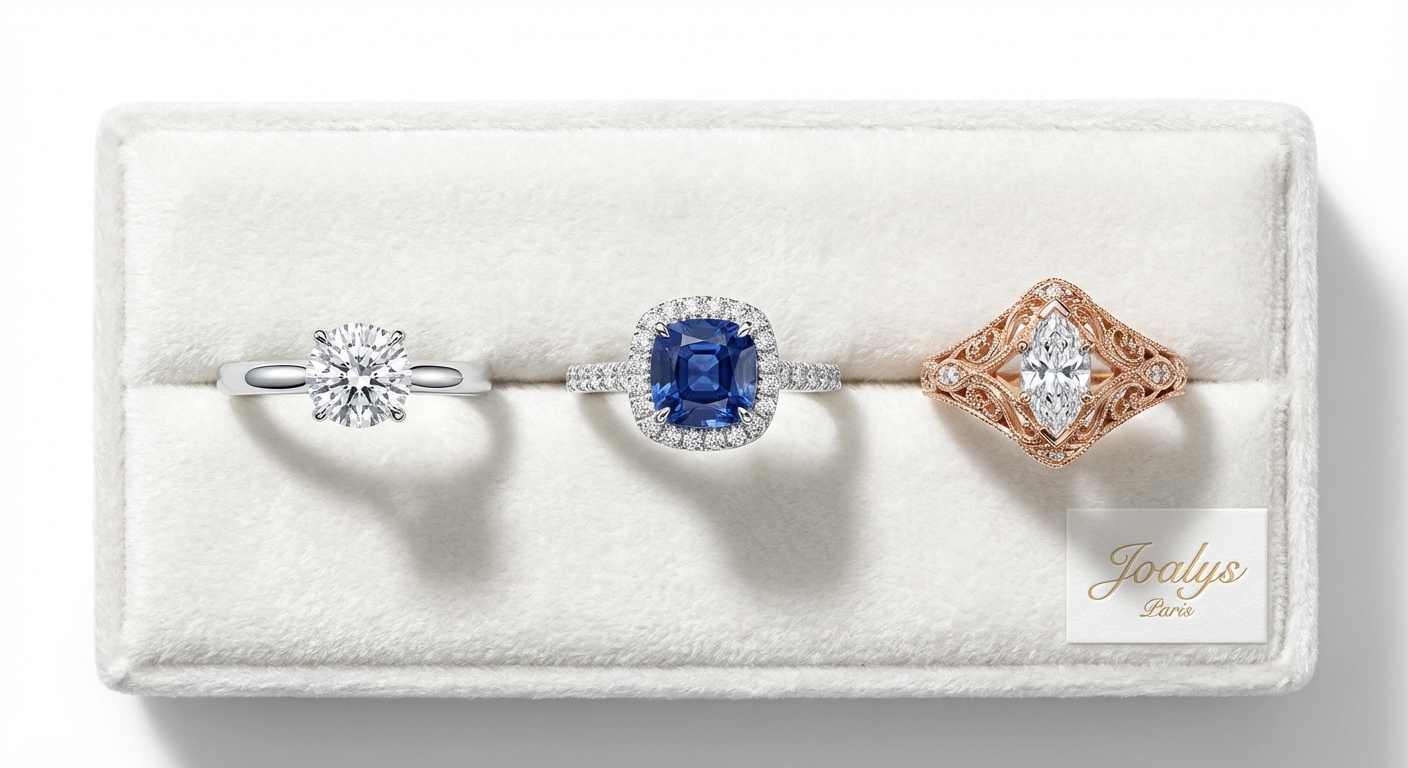
JOALYS sources small calibrated stones directly from Sri Lanka for inner band settings: sapphires, rubies, garnets, and spinel in sizes from 1.5mm to 3mm. Every stone comes with origin documentation.
- Choose your hidden stone - Browse small calibrated gems
- Receive with documentation - Origin and quality verified
- Set with your jeweler - Or use our custom jewelry service
Frequently Asked Questions
Conclusion
A diamond inside a ring is more than a design detail; it is a profound symbol of a private bond, realized through superior craftsmanship. This feature transforms a beautiful ring into a unique heirloom, a secret message whose meaning is reserved for the wearer alone, ensuring both deep sentiment and flawless daily comfort.
Creating this ultimate personal touch begins with the perfect stone. Joalys refines this journey with a unique 3-step process that puts you in control: first, select your certified gemstone from an expert-curated collection. You receive the stone in a luxury authentication case to inspect, then begin your custom design only when you feel completely ready. For personalized guidance on integrating your own secret story into a bespoke setting, you can schedule a consultation with a Joalys expert to create something truly extraordinary.
