Emerald Engagement Rings: How to Choose, What to Spend, What to Avoid (2026)
Chosen by Cleopatra and coveted by royalty for millennia, the emerald is more than a gemstone; it is a declaration of profound, enduring love.
Emerald Engagement Rings: Quick Facts
| Property | Details |
|---|---|
| Hardness (Mohs Scale) | 7.5 - 8 (Durable for daily wear with a protective setting) |
| Primary Value Factor | Color (Vivid, saturated green with a slightly bluish hue is most prized) |
| Symbolism & Meaning | Represents love, hope, fidelity, and new beginnings |
| Clarity Feature | Natural inclusions, called 'jardin' (garden), are expected and prove authenticity |
| Common Treatments | Clarity enhancement with oils or resins is a standard, accepted practice |
| Recommended Settings | Bezel, Halo, or multi-prong settings for maximum protection |
| Key Sources | Colombia (vivid green), Zambia (bluish-green), Brazil |
| Essential Care Tip | Avoid ultrasonic cleaners and harsh chemicals; use mild soap and water |

Introduction
Emerald engagement rings have been chosen by everyone from Cleopatra to Jackie Kennedy to Halle Berry. The appeal is consistent across centuries: that vivid green is unlike anything else in the gemstone world, and it photographs spectacularly.
Here is the honest part: emerald is Mohs 7.5 to 8, softer than sapphire, and almost all emeralds contain inclusions (called 'jardin'). Nearly every emerald on the market has been oiled or resin-filled to improve clarity. These are not reasons to avoid emerald. They are things you need to understand to buy it well and care for it properly. Updated March 2026.
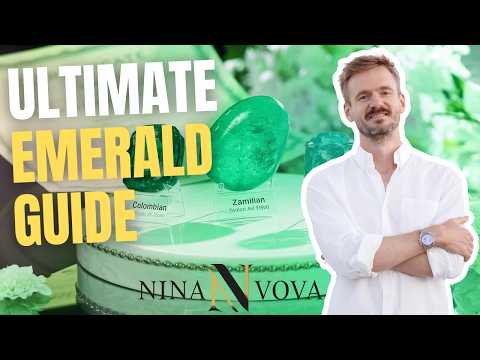
The Ultimate Emerald Buying Guide: Origins, Prices and Tips
The Timeless Allure: Why Choose an Emerald?
Three practical reasons emerald works for an engagement ring, and two genuine limitations to know upfront.
Emerald Engagement Rings — What to Know. Video: GIA — Gemological Institute of America.
Why It Works
Color that no other gemstone matches at any price. Mohs 7.5 to 8 is adequate for daily wear with a protective setting. Strong historical and cultural associations across multiple civilizations. And it is significantly more affordable than diamond at equivalent visual size.
The Limitations
Almost all emeralds are treated with oil or resin. This is standard industry practice and fully accepted, but it means the treatment can wear out over decades and the stone may need re-oiling by a jeweler. Inclusions are normal and expected in emerald. An "eye-clean" emerald (no visible inclusions at arm's length) commands a significant premium.
A prong-set emerald in a ring worn daily while doing physical work will chip eventually. Bezel or halo settings are strongly recommended for active wearers.

Beyond the 4Cs: Evaluating Your Emerald's Quality
Color dominates emerald quality evaluation more than any other factor.
Color: What to Look For
The ideal emerald shows vivid, medium-toned green with slight bluish secondary hue. Too dark and the stone loses its glow in low light. Too light and it looks like green beryl rather than true emerald. The most prized shade is often described as "traffic light green" with strong saturation and no grey or brown masking.
Colombian emeralds typically show a warmer, slightly yellowish-green. Zambian emeralds tend toward cooler blue-green. Neither is objectively better. It is a matter of personal preference and which color reads better in your chosen metal (yellow gold enhances warm Colombian tones; white gold suits Zambian blue-green).
Clarity and Treatment
The GIA uses a clarity scale for emerald that acknowledges inclusions as normal: "Minor" oiling (F1), "Moderate" (F2), "Significant" (F3). F1 or untreated stones command the largest premiums. For a jewelry piece rather than an investment stone, F2 with good color is perfectly acceptable and much more affordable.
Ask directly: "What is the treatment level on this stone?" Any reputable dealer will answer. If they cannot or will not, move on.
Cut and Carat
The "emerald cut" (rectangular step cut) was literally designed for this stone: it protects the corners from chipping and shows the color beautifully. Oval and cushion cuts also work well. Round brilliant cuts waste significant rough. Above 2 carats, fine emerald becomes rare quickly and prices escalate steeply.

The Lived Experience: Emerald Durability & Care
Emerald at Mohs 7.5 to 8 is solid enough for daily wear if you are thoughtful about it.
Setting Recommendations
Bezel settings provide the best protection for the stone's edges. Halo settings add impact while shielding the center. Classic prong settings are fine for emerald earrings and pendants. For a daily ring, especially on the dominant hand: bezel or halo. For an occasional ring worn carefully: prongs are acceptable.
Daily Care
Remove before gardening, gym, kitchen work, and any activity involving impact or harsh chemicals. Chlorine bleach degrades the oils and resins used to treat most emeralds. Clean with a soft damp cloth and mild soap. No ultrasonic, no steam.
Every 5 to 10 years, a jeweler can re-oil a treated emerald to restore its clarity. This is a routine service, costs $30 to $80, and keeps the stone looking its best. Plan for it.

Making the Investment: Budget, Ethics & Certification
Emerald pricing has a wide range. Here is how to navigate it.
Real Price Ranges (March 2026)
Commercial quality (visible inclusions, moderate treatment): $100 to $400 per carat. Good quality (eye-clean or near, moderate treatment, solid color): $400 to $1,500 per carat. Fine quality (Colombian or Zambian certified, minor treatment, vivid color): $1,500 to $6,000 per carat. Exceptional (Colombian, minor/no treatment, GIA certified, top color): $6,000 to $50,000+ per carat.
Certification
For any emerald above $500, require a GIA or AGL certificate. The report will state the origin (Colombia, Zambia, Brazil) and the treatment level. These two pieces of information are worth the certification cost. An uncertified "Colombian emerald" at a suspicious price is almost certainly not Colombian.
Lab-Grown Emerald
Lab-grown emerald is chemically identical to natural emerald and typically costs 80 to 90% less. The color can be exceptional. For buyers who want maximum visual impact on a limited budget and have no interest in rarity or investment value, lab-grown is a legitimate choice. Just ensure it is disclosed as lab-grown and priced accordingly.

Create Your Perfect Ring
Ready to Find Your Emerald?
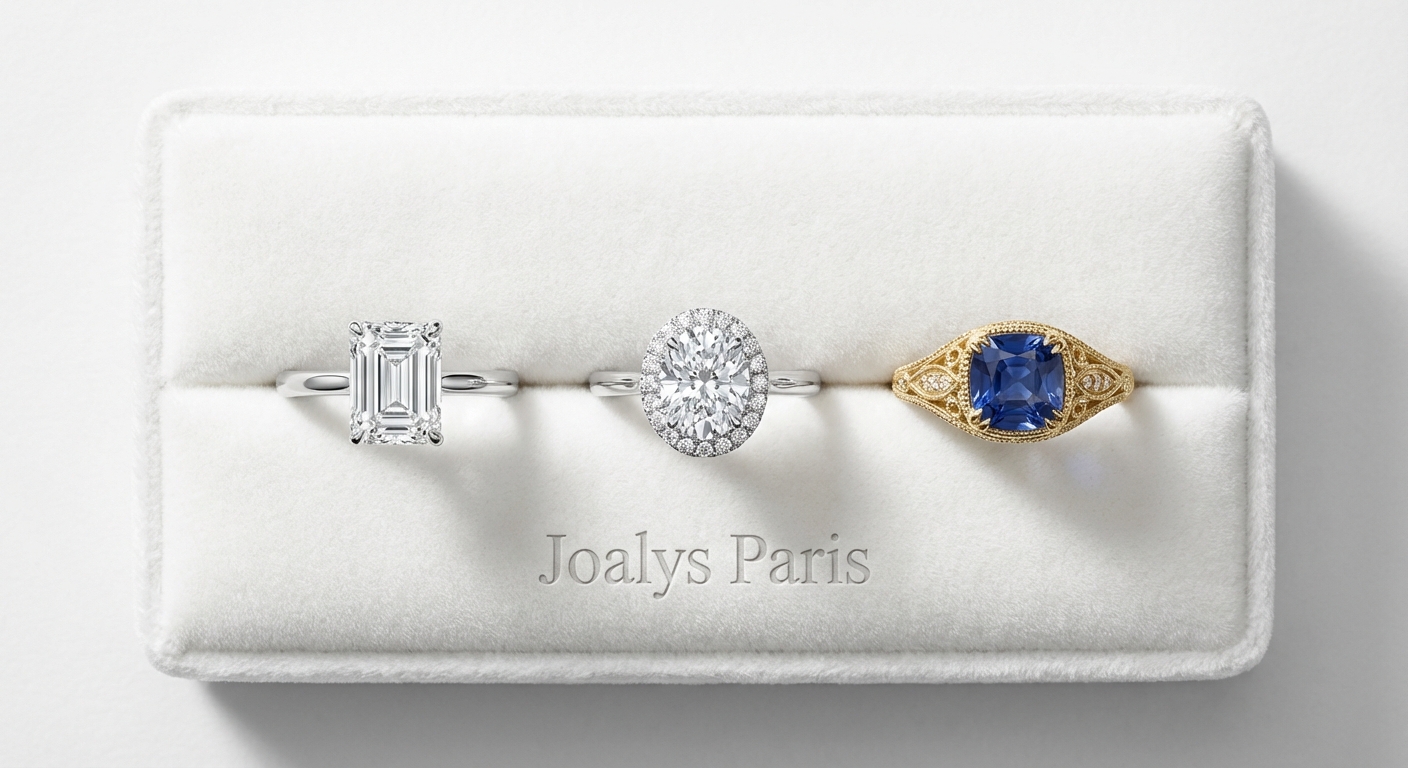
Every JOALYS emerald comes with independent lab certification and traceable origin documentation. Our process:
- Choose your stone - Browse our certified emerald collection
- Receive and inspect - Full documentation included
- Design your setting - Custom ring with our jewelers
Frequently Asked Questions
Conclusion
Choosing an emerald engagement ring is a deeply personal statement, prioritizing vibrant color and unique character over traditional metrics. A lasting investment is secured by understanding that an emerald's value is defined by its rich hue, its longevity is ensured by a protective setting, and its brilliance is maintained through mindful care. Equipped with this knowledge, you can navigate the selection process with confidence and find a gemstone that truly resonates with your story.
Your journey to the perfect symbol of your commitment begins with the stone itself. Joalys offers a unique approach to this significant purchase. The process starts when you select your certified emerald from an ethically sourced collection, which is then sent to you in a luxury authentication case for private viewing. Once you are certain of your choice, you can design your custom setting when you are ready to complete your ring. For personalized guidance in finding a gemstone that captures your vision, schedule a virtual consultation with an expert gemologist.
