Sapphire Engagement Rings: How to Choose, What to Spend, and What to Avoid
Choose a ring with a story. A sapphire engagement ring offers vibrant color, royal history, and lasting durability. Learn how to select a brilliant gem. ► Read now!
Quick Facts
| Property | Details |
|---|---|
| Primary Colors | Blue, Pink, Yellow, White, Padparadscha, Green |
| Hardness | 9 on Mohs scale (second only to diamond) |
| Durability | Excellent for daily wear |
| Price Range | $500 - $10,000+ depending on quality and size |
| Popular Settings | Solitaire, Halo, Three-Stone, Vintage |
| Best Metal Choices | Platinum, White Gold, Rose Gold, Yellow Gold |
| Symbolism | Wisdom, loyalty, nobility, and sincerity |

Introduction
Blue sapphire has been the gemstone of choice for royal engagement rings for centuries, and Princess Diana's 12-carat Ceylon sapphire ring (now on Kate Middleton's finger) brought that tradition back into mainstream consciousness in a way nothing else has. In 2026, sapphire engagement rings represent roughly 10% of the fine jewelry engagement market, up from under 3% in 2010.
The appeal is straightforward: Mohs 9 hardness means a sapphire can handle daily wear for a lifetime. The color range is extraordinary, from cornflower blue to padparadscha orange-pink to teal to yellow. And the price-per-carat is significantly lower than equivalent diamond for a stone that is genuinely rarer in fine quality.
Here is everything you need to know before buying. Updated March 2026.
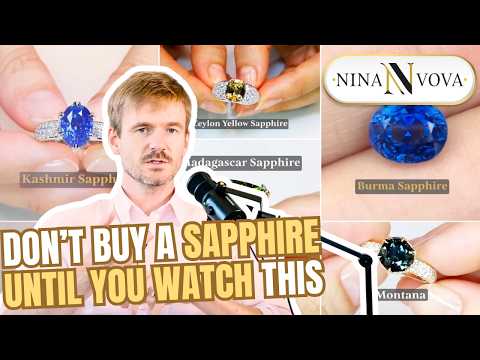
Sapphire Engagement Ring Guide: No Regrets
Why a Sapphire? The Allure of a Modern Heirloom
Three practical reasons sapphire works for an engagement ring, beyond the aesthetics.
Sapphire Quality Factors for Engagement Rings. Video: GIA — Gemological Institute of America.
Durability: Built for Daily Wear
At Mohs 9, sapphire is the second hardest natural gemstone after diamond. It resists scratching from virtually every material you will encounter in daily life. Granite countertops are around 7. Steel tools are 6. Sapphire handles all of it without scratching. For a ring worn every day for 50 years, that matters more than people realize when they are shopping.
According to the Gemological Institute of America (2025), corundum (sapphire and ruby) shows the lowest rate of surface degradation of any colored gemstone in long-term wear studies. That is the clinical way of saying: it stays beautiful.
Color That Diamond Cannot Offer
A diamond engagement ring has one color option: white. A sapphire comes in 12 distinct color families. The blue range alone spans from pale baby blue to deep navy, with the most valued shade being the medium-toned cornflower blue with slightly violet secondary tones associated with Ceylon (Sri Lanka) origin.
Value vs. Diamond
A fine 2-carat blue sapphire costs $3,000 to $8,000 per carat retail. An equivalent 2-carat diamond costs $8,000 to $25,000 per carat. Same size, same visual impact in a ring, very different price. The sapphire is also rarer in high quality, but the market has not caught up to that reality yet.

Decoding Quality: The 4 Cs of Sapphires
Color dominates sapphire quality evaluation. Everything else follows.
Color: What to Look For
The ideal blue sapphire for an engagement ring shows medium to medium-dark tone, strong saturation, and minimal grey or green secondary hues. The classic "cornflower blue" associated with Ceylon sapphires shows a pure blue with very slight violet that makes the stone look vivid under all lighting conditions.
Avoid stones with heavy grey masking (they look dull and "steely" in natural light) or strong green secondary color. Both are signs of lower-grade material regardless of what the seller's grade label says.
For heated vs. unheated: most sapphires on the market have been heat-treated to improve color and clarity. This is standard, accepted, and should be disclosed. Unheated sapphires of comparable quality command 30 to 60% premium because the color is entirely natural. For an investment piece or a stone above 2 carats, unheated with a GIA or AGL origin certificate is worth the extra cost.
Clarity
Sapphires are expected to have some inclusions, unlike diamonds where "flawless" is a meaningful grade. What matters is eye-clean: no visible inclusions when viewed face-up at arm's length. Silk (fine rutile needles) in unheated sapphires is actually a positive sign of authenticity and does not affect beauty. Fractures that reach the surface are a problem. Clouds that affect transparency are a problem. Individual mineral crystals are typically not.
Cut and Carat
Oval and cushion cuts are the most popular for sapphire engagement rings because they maximize color depth and suit the stone's natural crystal shape. Round brilliant cuts show more brilliance but waste more rough. For a 1 to 3 carat center stone, oval is our top recommendation: flattering on the finger, shows color beautifully, and typically costs 15 to 20% less per carat than equivalent round material.

The Spectrum of Splendor: Beyond Classic Blue
Blue is classic, but the sapphire family offers options that are genuinely rarer and increasingly sought after.
Padparadscha: The Rarest Sapphire
Padparadscha is a pink-orange sapphire named after the lotus flower. The term is specific: the color must show both pink and orange simultaneously, in roughly equal proportion. Too pink and it is just a pink sapphire. Too orange and it loses the designation. Genuine padparadscha is rarer than fine blue sapphire and priced accordingly: $2,000 to $10,000+ per carat for certified material.
We find padparadscha the most visually distinctive option for an engagement ring. It reads as completely unique without being unconventional.
Teal Sapphire
Blue-green teal sapphires have seen a sharp rise in demand since 2020, particularly in the UK and Australian markets. They are typically from Montana (USA) or Madagascar. Prices remain relatively accessible compared to fine blue Ceylon: $500 to $2,500 per carat for good quality. Strong teal with even color distribution is the target.
Yellow and Pink
Yellow sapphire pairs beautifully with rose gold settings. Pink sapphire works well for buyers who want color without going to ruby pricing. Both are significantly more affordable than blue or padparadscha: $200 to $800 per carat for clean, well-colored material.

Designing Your Dream: Styles and Settings
The setting does two jobs: secures the stone and frames the color. For sapphire, metal choice changes how the color reads dramatically.
Metal Pairing
White gold and platinum enhance the cool blue tones of classic Ceylon sapphire. They make the blue look cleaner and more vivid. Yellow gold warms the stone, which works beautifully for teal, yellow, and padparadscha sapphires but can make pure blue look slightly greenish. Rose gold is an increasingly popular choice for pink sapphires and padparadscha.
Platinum is the most durable setting metal for a ring worn daily. White gold requires rhodium replating every 2 to 3 years to maintain its white finish. For a lifetime ring, platinum is worth the extra cost.
Setting Styles
Solitaire prong settings maximize light entry and show the stone at its best, but leave the girdle exposed. For a Mohs 9 sapphire this is fine, unlike softer stones. Halo settings add visual size and protect the center stone's edges. Three-stone settings with sapphire center and diamond side stones give the classic Diana ring look and remain the most requested style we see. Bezel settings are modern and protective but reduce light entry slightly, which can make darker stones look heavier.

Ready to Find Your Sapphire?
Ready to Find Your Sapphire?
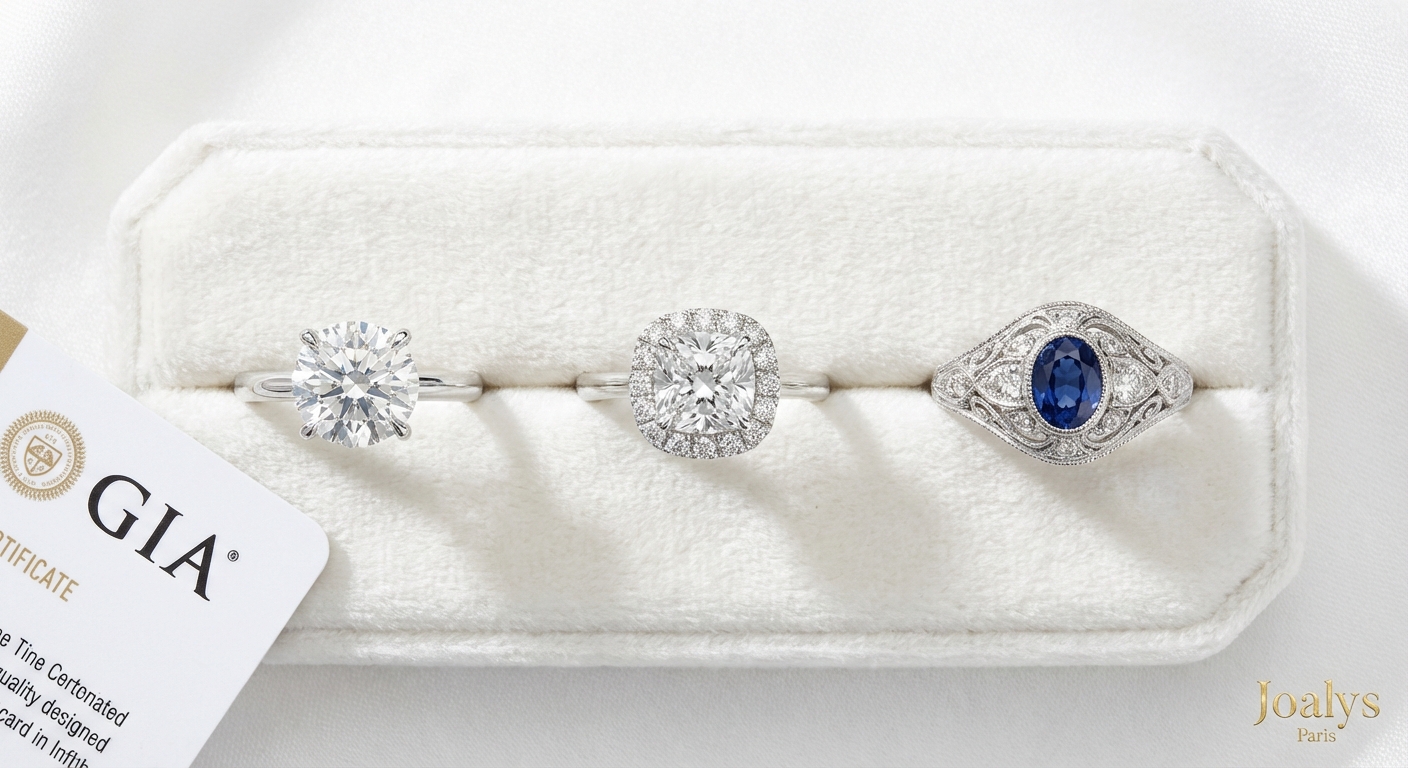
Every JOALYS sapphire is sourced directly from origin, certified by an independent gemological laboratory, and traceable from mine to setting. Our three-step process:
- Choose your stone - Browse our certified sapphire collection
- Receive and inspect - Delivered with full documentation and authentication
- Design your setting - Work with our jewelers on a custom ring
Frequently Asked Questions
Conclusion
Choosing a sapphire engagement ring is a decision rooted in a desire for durability, symbolic meaning, and unique beauty. Armed with an understanding of how color, clarity, and cut define a stone's quality, any buyer is now equipped to select a gem that is both a wise investment and a personal statement. This knowledge transforms the search from a challenge into a confident and rewarding journey.
The next step is to translate this expertise into action. Joalys facilitates a unique, stone-first approach to creating the perfect ring. It begins when you select a certified gemstone from a curated collection, which is delivered in a luxury authentication case for your personal inspection. This process ensures you can design the custom setting with complete confidence when you are ready. For personalized guidance in creating truly extraordinary sapphire engagement rings, speak with an expert gemologist to begin your bespoke journey.
